Oct 24, 2024

318


Jill Stone always had a feeling she was going to end up with a breast cancer diagnosis. But that didn’t make the reality of it much easier when she faced it at just 43 years old.
Stone, senior director of physical medicine & rehabilitation and respiratory care at TidalHealth, had a problematic family history working against her. Having three close relatives who suffered from breast cancer significantly increased her chances of one day staring down the disease herself. Stone began getting routine mammograms at 35 because of the increased risk.
Although her journey was a difficult one, she is now a six-year cancer survivor. But what the experience underscored for her was the importance of regular testing for women 40 and over as well as those who are younger but face increased risks. She has since made it her mission to help get as many women screened as possible, and that has aligned perfectly with the TidalHealth mission to improve the health of the communities it serves.
“After my diagnosis, I talked to hospital leadership about how I felt like we could do a better job of raising awareness of the importance of mammograms and preventative screening,” Stone said. “Within the walls of our organization, we have 6,000 employees, the majority of which are women. They let me create this breast cancer awareness committee, and we have done all kinds of different things to raise awareness.”
When the potential of introducing a mobile mammography unit into the region came up, the committee teamed with the TidalHealth Foundation to launch a fundraising campaign to support its purchase. The campaign came to a successful conclusion by reaching the $1 million goal on Sept. 15.
“We know that early detection saves lives,” said Jessica Hales, president of the TidalHealth Foundation and vice president/chief philanthropy officer for TidalHealth. “Barriers to healthcare access is a common problem for rural communities like Delmarva. Often women put their healthcare last, utilizing time off from work for doctors’ appointments for their children, spouse or aging parents. This unit will meet people where they are, to make screenings just a little easier.”
The group launched the campaign internally during October of 2023. TidalHealth team members alone raised $125,000 in just one month. The remarkable feat set the tone for the campaign and provided the spark that the community continued.
“This campaign wasn’t funded by one large donor; it was funded one dollar, one donor at a time,” Hales said. “We didn’t want this to be a typical campaign. We wanted true community buy-in, not just for funding, but for belief and support. This is only the beginning of a journey that won’t be easy, but we know the community is behind it.”
“Philanthropy is personal; each dollar carries a story of sorrow, courage or hope,” added Hales, who lost her mother to breast cancer at just 51 years old. “Each contribution made in honor of or memory of a loved one, regardless of the amount, is represented on the back of the unit.”
The ribbon was cut on the new mobile mammography unit in late October and will launch in the community in early 2026. It is comfortable, private, efficient and staffed by expert technologists. Appointments will take about 15 minutes.
“It's tremendous, especially in our community, which is a rural setting,” said Dr. David Sechler, chief of general surgery at TidalHealth and a leading breast surgeon in the region. “It’s hard to believe, but there are places on the Delmarva Peninsula where people can be an hour and a half to two hours from healthcare. There are places where it may not sound far — from Salisbury to Crisfield for example — but it's far if you don't have that means of transportation. In this case, we are going to the patient.”
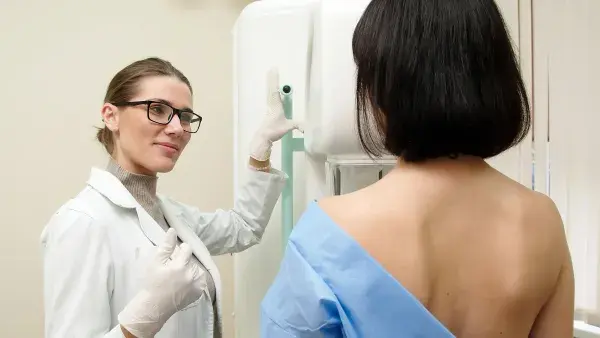
The unit is also equipped with the latest 3D imaging technology.
According to Sechler, annual mammography has always been the best way to catch cancer at the earliest possible time. Innovations in mammography have dramatically improved the ability to identify cancer. 3D mammography — a major leap forward in screening — was approved by the Food and Drug Administration (FDA) in 2011.
By 2014, a study published in the Journal of the American Medical Association (JAMA) found that 3D mammography increased invasive cancer detection by 41 percent and decreased the number of women called back for additional screening by 17 percent.
“TidalHealth has always been at the forefront of breast cancer screening.” Sechler said. “We adopted that technology very early on, so we stayed current and definitely cutting-edge. Basically, the level of difference (between standard mammography and 3D mammography) would be like that of high-definition TV versus old-fashioned television.”
Original mammography produced only two-dimensional images that were also hazy, which made it more difficult to identify cancer, particularly in women who have dense breast tissue. While 3D mammography is much clearer, it is the three-dimensional aspect of the images it creates that provided the biggest leap forward.
“Instead of just taking a one-shot picture of the breast, it's taking 20 to 30 images, which divide the breast tissue into layers like a loaf of bread. So, it's kind of similar to a CAT scan where it takes these bread slice pictures and assembles it into a 3D model. So that's how it has helped to detect things that might've been hidden from us previously. It has definitely elevated our ability to find smaller things earlier.”
The goal for Sechler — who performs stereotactic breast biopsies at the TidalHealth Breast Center on Snow Hill Road in Salisbury — would be to eliminate barriers to cancer screening and care, including time and distance. When caught early, the five-year breast cancer survival rate is over 99 percent. When one in eight women will be diagnosed in her lifetime, every screening matters.
“Ten years ago, I wouldn't have thought I would be leading a breast cancer committee, helping with fundraising, talking to people and being on the radio and TV,” Stone said. “No, that is not my thing. But, you know, I did it. I found the passion and when people I talk to say, ‘I'm not getting a mammogram, I say ‘are you crazy?’ I am very quick to call them out.
“If I didn't get mine six years ago, I 100 percent would not be alive today. There's no question. So, would I go get that uncomfortable five-minute mammogram to save my life? Yes, and I'm not living just for myself. I'm living for my kids and my family.”
“Don't be selfish, go do it.”
4 min read
Over the last five decades, lung cancer has remained the leading cause of cancer-related deaths, primarily due to late-stage diagnosis resulting in less effective treatment outcomes. In the early stages of lung cancer, patients and healthcare providers are unable to identify any indications or symptoms; however, significant advancements in lung cancer screening have considerably enhanced the ability to detect lung cancer in its early stages.
4 min read
There are many reasons to want to lose weight — it can be tough on your joints and make it harder to exercise, interfere with your sleep, and even increase your risk of health conditions like diabetes, heart disease and certain cancers. If you’re thinking about weight loss, step one is knowing that obesity is something you can and should manage.
1 min read
No matter your age, it is important to be proactive with your healthcare. There are many potential diseases and conditions that if detected early will lead to better outcomes. This requires you to have a primary care provider to work with you to not only address your concerns, but to also determine the necessary screenings recommended.