

Jun 27, 2025

228
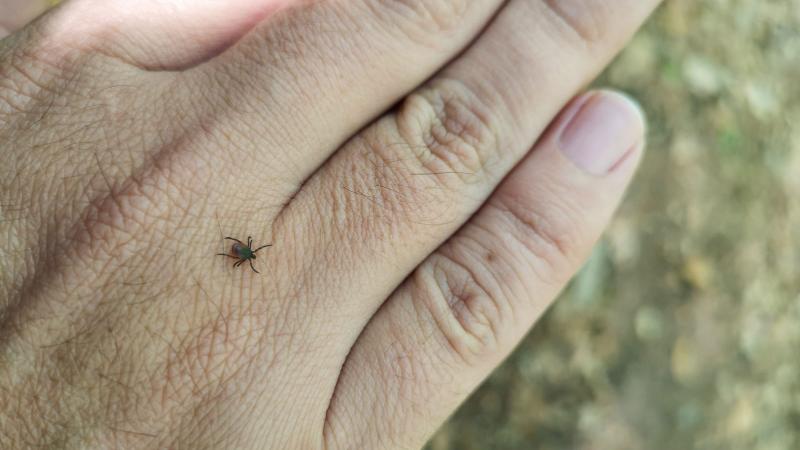

Ticks can be tiny, but they can cause big problems.
That doesn’t mean people need to stay inside, but experts recommend taking precautions.
Areej Khan, MD, who cares for patients at TidalHealth Infectious Disease in Delmar, said summertime is when tick activity is highest in Maryland and Delaware.
People can get tick bites while doing something active like hiking, but ticks can also bite people who are relaxing in their backyard or even inside – if a pet brings one in, Dr. Khan said.
“On the Eastern Shore, we commonly find ticks in parks, hunting areas and residential properties bordering wooded lots,” Dr. Khan said.
Not all tick bites lead to infection, but Lyme disease may be the first thing that people think of when it comes to ticks. On the U.S. Centers for Disease Control and Prevention’s Selected Tickborne Disease Surveillance map, showing cases from 2019-2022, Lyme disease had higher numbers than other types of diseases in this area.
Wicomico County logged 39 Lyme disease cases during this time frame, Worcester logged 60, Somerset logged 20 and Sussex, which has the largest population among these four counties, logged 258, according to the CDC data.
Lyme disease is a bacterial infection that can cause fever, headache, fatigue and a rash, spreading to other locations in the body if it’s not treated, the CDC says.
Deer ticks can spread many diseases, and Dr. Khan said it’s possible for a deer tick to give a person more than one infection with its bite.
The CDC says ticks in this area can also cause the following diseases:
Dr. Khan also mentioned lone star ticks can spread alpha-gal syndrome, leaving the person with an allergy to pork, beef and mammalian meat.
In April, the State of Delaware shared in a news release that the state had its first confirmed detection of Powassan virus in a tick. If someone is bitten by a tick with Powassan virus, it can infect them quickly and have serious, potentially fatal, impacts.
Dr. Khan recommends the following:
Dr. Khan shares what to do if you notice a tick attached to your body:
While people may have heard of the rash often left by a tick bite, there isn’t always one, and they may have flu-like symptoms instead, Dr. Khan said.
Dr. Khan suggests making it a habit to do a routine skin check at the end of the day during the summer.
“A two-minute skin check can detect ticks early and prevent weeks and months of feeling unwell,” she said.
If you have a primary care practitioner and can make a prompt appointment with them, you can do so. If you are experiencing symptoms on a weekend or after hours, reserve a spot at TidalHealth Urgent Care. See locations and hours here.
3 min read
Especially for those with the chronic disease of obesity, it’s important to understand what’s in your food. The type of nutrients you’re taking in is more important than the total amount of food you eat. Learn more in this article by Dr. Sandra Palavecino.
4 min read
Delmarva, like the rest of the country, is in the midst of a bad flu season. Read on to see what the stats show, plus tips for staying healthy.
3 min read
Ticks are common throughout Delmarva, and since many of us spend time outdoors among the Shore’s wealth of nature, tick bites happen. It is important to take certain steps to prevent the potential transmission of diseases.