

Nov 10, 2025

292
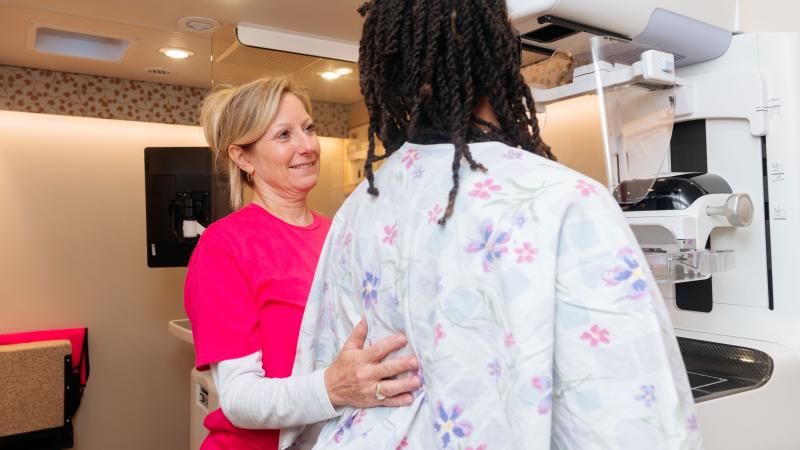

If you receive a call or a letter indicating something possibly abnormal was found on your mammogram, the first thing you should do is take a deep breath. Your medical team may request additional imaging for a variety of reasons, and they will always be vigilant about reviewing your scans.
Next steps could be more detailed imaging, such as a new mammogram or a sonogram, according to Nicholas Dudas, MD, FACS, and medical director for surgical specialties at TidalHealth.
You will have an appointment scheduled to review your latest imaging with your physician. Alae Zarif, MD, explained that it will be during this appointment that the physician will discuss what they see and answer your questions.
“It’s important to explain everything in terms that my patients can understand,” Dr. Zarif said.
This visit may lead to a biopsy, which will determine whether abnormal-seeming tissues or cells are cancerous. This result can take five to 10 days.
Once the biopsy results are received, your doctor will tell you if the results are benign or malignant. Benign means that the sample tested does not show signs of being cancerous. This could still mean surgery is recommended, and your doctor will discuss options with you. If the biopsy is determined to be malignant, this means the pathology report indicates that cancer cells are present.
Sharnell Smith, MD, explained that her relationship with her patients is very important and sharing knowledge and listening to her patients is paramount. For some patients, surgery is the best way to remove a malignant tumor in the breast. Your surgeon will work with your entire care team to help you make the best choices for your treatment plan.
Your team can consist of a surgeon, medical oncologist, radiation oncologist, nurses, navigators and support staff. Depending on the individual situation, you and your surgeon may choose a mastectomy or partial mastectomy. Dr. Dudas said that in most cases for breast cancer patients, lymph nodes are also removed and sent for testing to give your team additional information.
Dr. Dudas also said he works closely with radiation oncology and medical oncology for additional treatment. Chemotherapy and/or radiation therapy may be used before surgery or after surgery to target cancer cells and shrink a tumor. According to the National Cancer Institute, chemotherapy is a systemic treatment, meaning the medication affects your entire body. Radiation therapy is a more targeted treatment that focuses on a specific area of the body. Both treatments can have side effects, and your physician or treatment team will discuss the value of the treatments, depending on individual circumstances.
After treatment is completed, or sometimes in tandem with surgery, a plastic surgeon will join your team if you choose reconstructive surgery. The surgeon and plastic surgeon will work together for the benefit of the patient to give you the best possible outcome.
The team at TidalHealth is highly trained and has decades of experience to help you through each step of your treatment and recovery.
Dr. Dudas said, “Breast cancer reoccurrence is generally low, but not zero,” so even after the cancer is eradicated, your team will continue to follow you and check in periodically.
Once you are a TidalHealth patient, you will always be part of team TidalHealth — as the captain of your own team.
While the American Cancer Society no longer recommends monthly formal breast self-exams, Dr. Sharnell Smith, who cares for patients at TidalHealth, says she continues to recommend them to her patients.
“I recently had a patient come to me because she felt something,” Dr. Smith said.
Breast self-exams can empower women to advocate for themselves when they feel something unusual or notice something different in their breasts.
Breast self-exams can be done in the shower, laying down flat on your back or in front of a mirror. They should be performed at the same time every month because your body changes throughout the month according to your menstrual cycle. Once in the habit of doing them, you should continue into perimenopause and post-menopause.
With a bent elbow, place your left hand behind your head and use the three middle fingers of your right hand to palpate, or touch, in small circular motions around your breast tissue. Note anything that feels different from the prior month, and if you feel something suspicious, call your doctor for an appointment. Once complete on the right side, switch to the left side and complete the same steps.
If you need breast surgery, find practitioners and locations here. If you need a mammogram, ask your primary care practitioner or learn more about TidalHealth Mobile Mammography at tidalhealth.org/mobilemammo.
2 min read
If you haven't visited the doctor lately, it's not too late to get on a healthy journey. Dr. Danielle Giddins shares what to expect.
5 min read
Physicians from the TidalHealth Family Medicine Residency Clinic share back-to-school advice and information.
3 min read
Officials shared the new name of TidalHealth's Berlin hospital and the move to Epic's MyChart this week.